1834 Wyeth “Oregon Trail” Route
Contributed by Steve F. Russell
During the 1830s, Nathaniel Jarvis Wyeth (1802–1856) played a significant role in the development of what would become known as the Oregon Trail. In Independence, Missouri, he joined forces with William Sublette, and they traveled to the 1832 Pierre’s Hole Rendezvous via the Platte River, South Pass, and the upper Green River. Guided by Milton Sublette, he continued to the Snake River. Wyeth then took a route to present Boise, Idaho, over the Blue Mountains, and down the Columbia to Fort Vancouver. His efforts during this decade included founding Fort Hall and Fort William. Wyeth’s journey contributed to the eventual influx of American settlers and the development of Oregon Country.—KKT, ed.
Map Files
Static Map Images

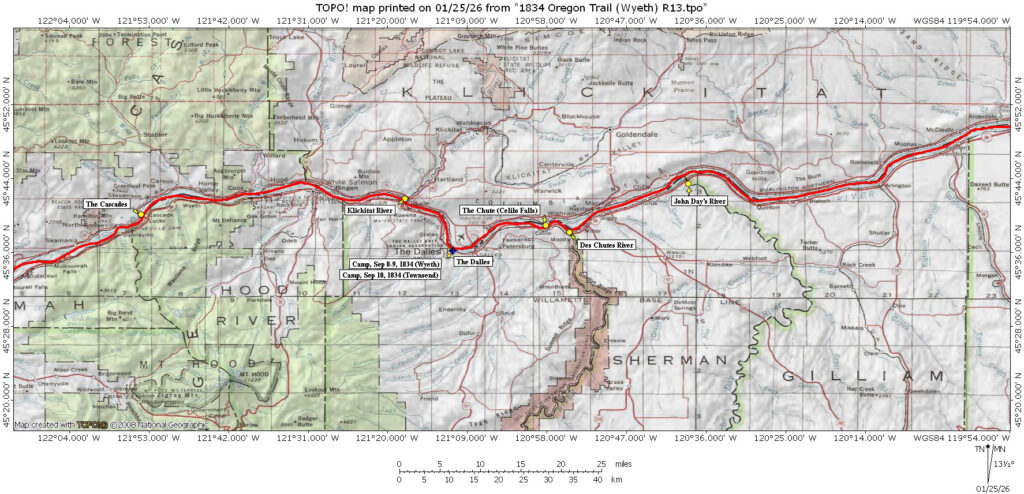
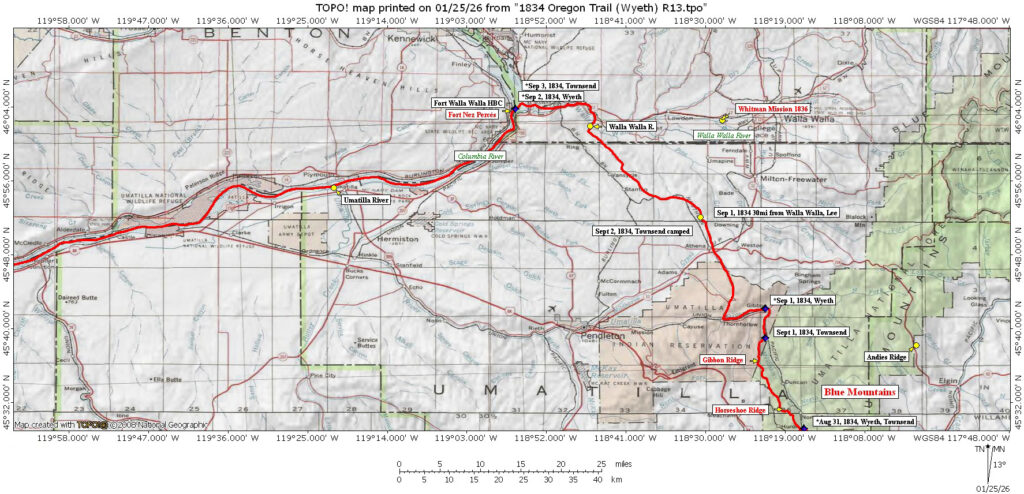
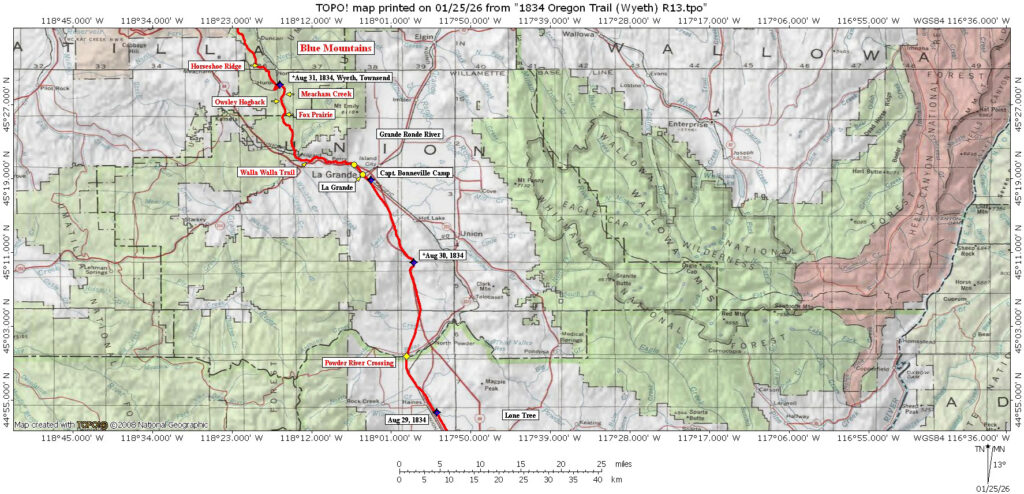

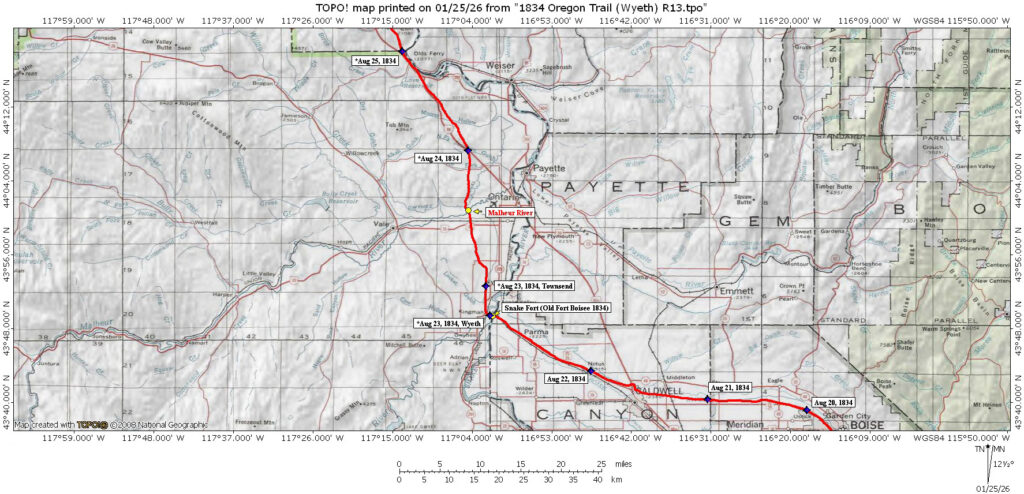
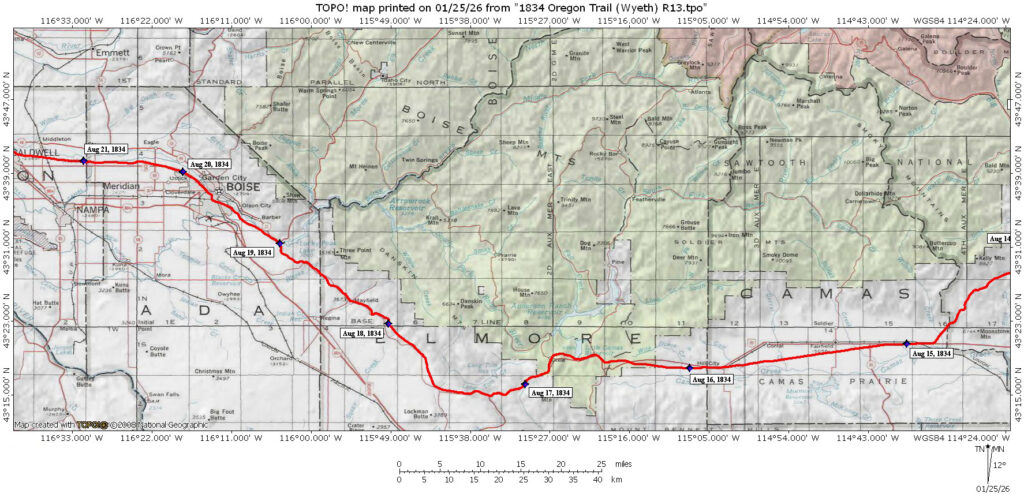

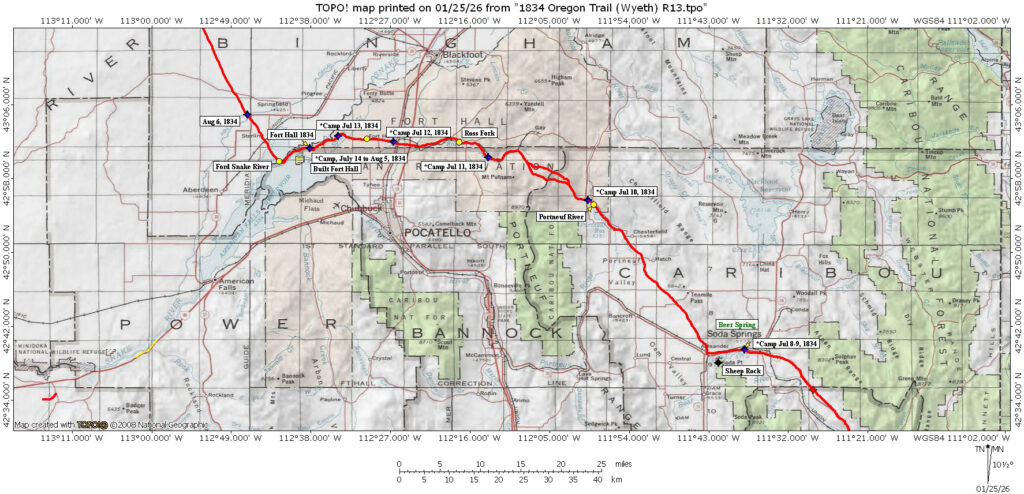
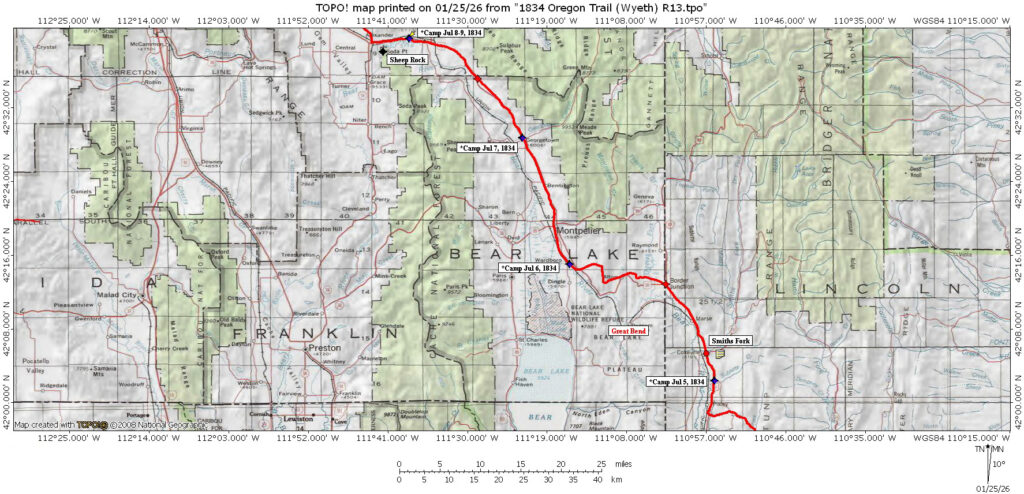

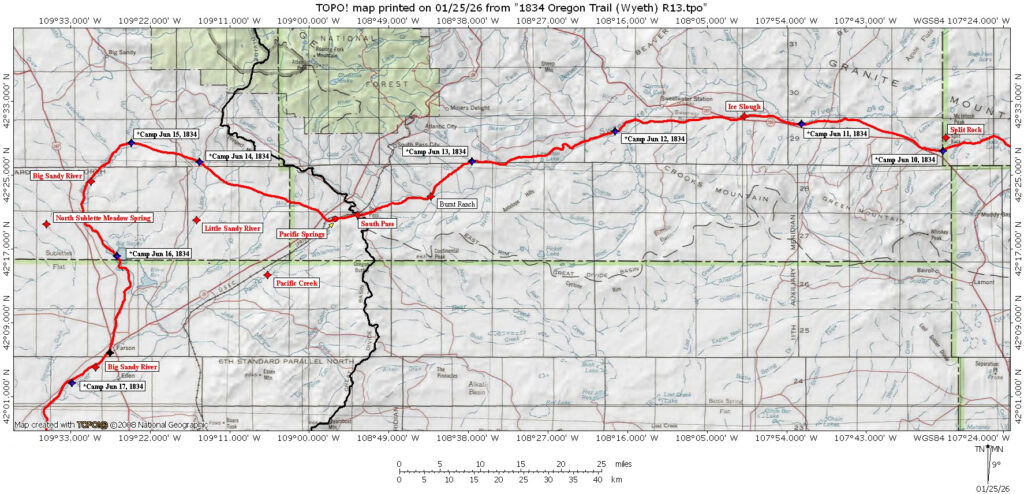
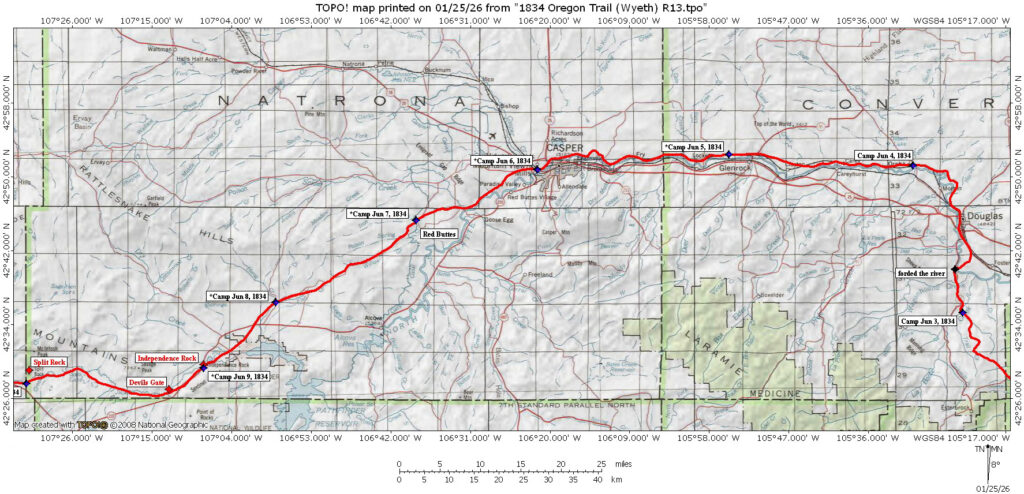
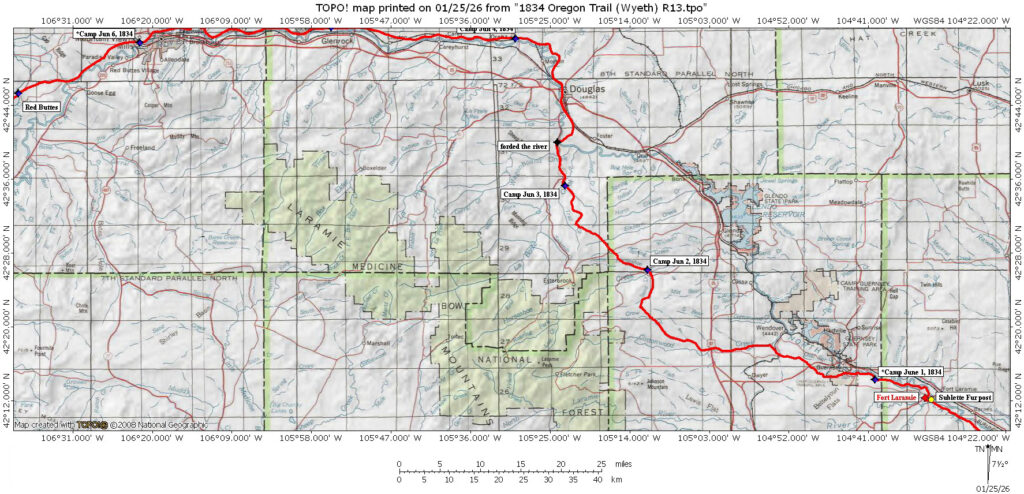
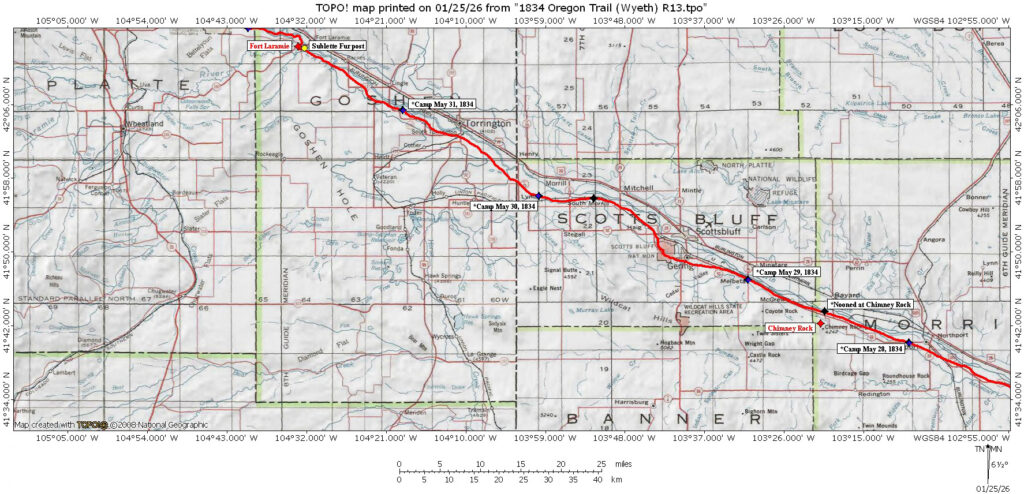
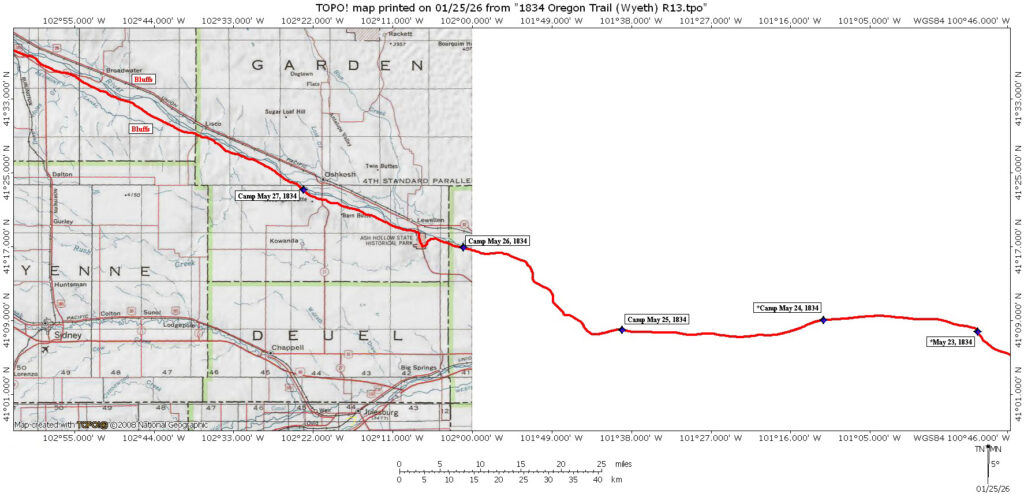
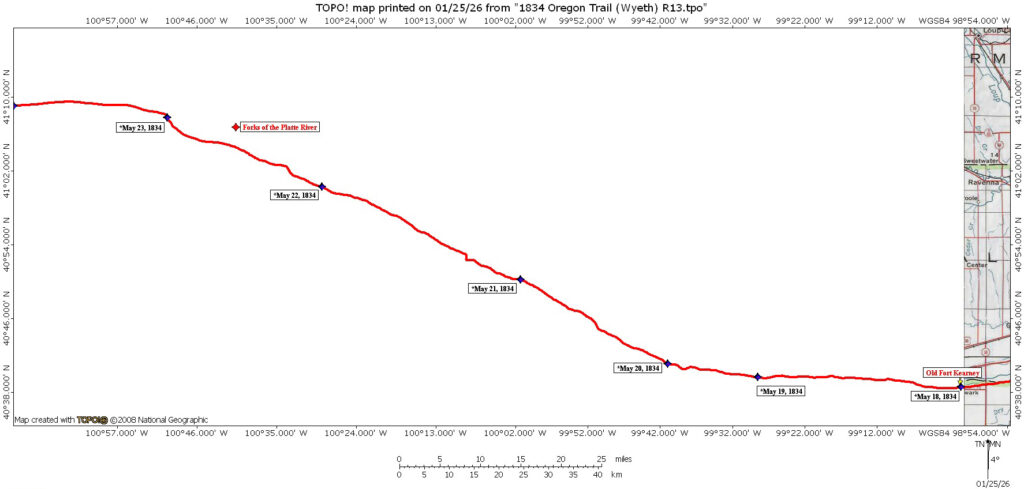
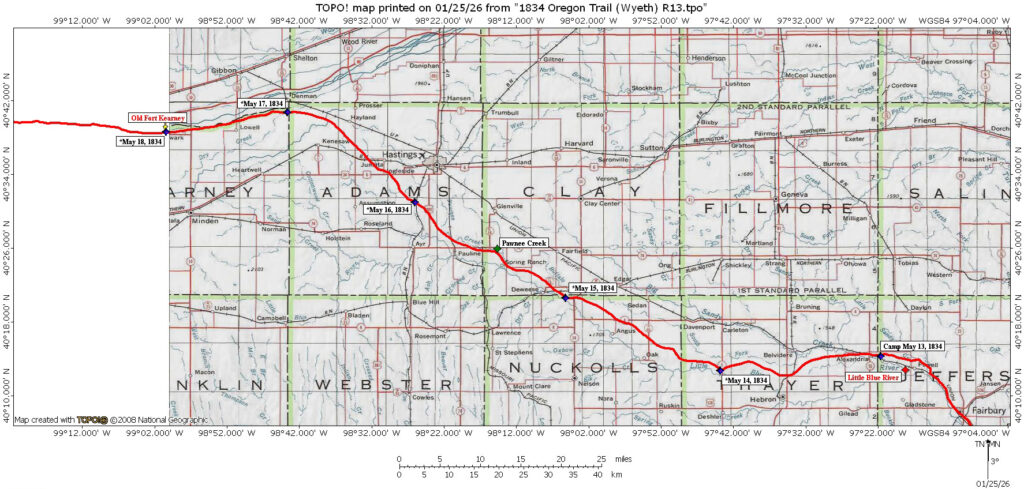
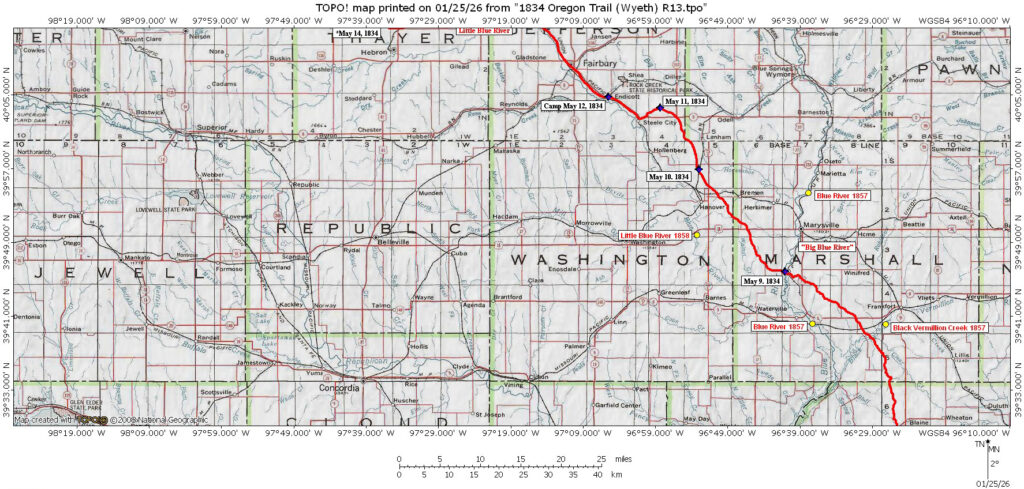
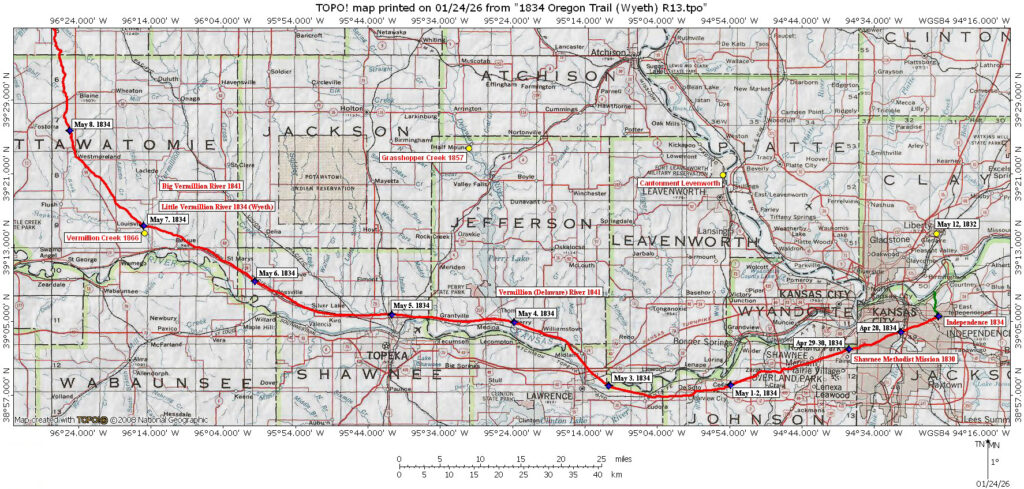
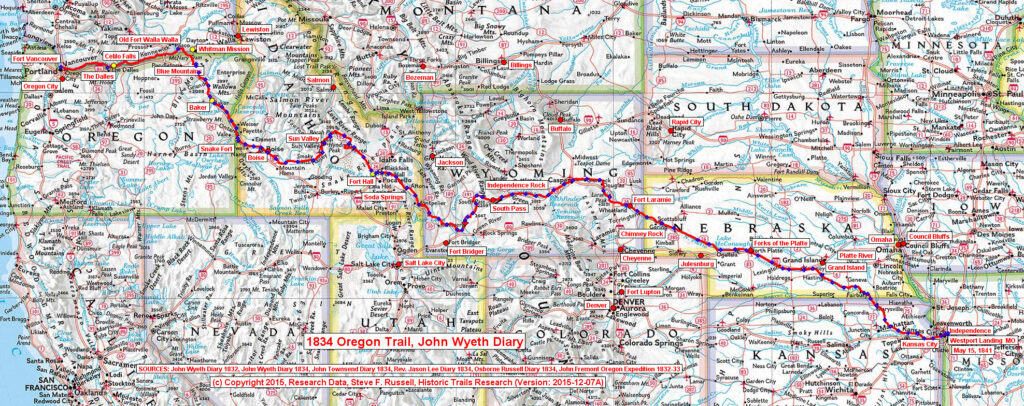
Annotated Source Material
- Nathaniel J. Wyeth’s Oregon, or a Short History of a Long Journey, 1832
- John Townsend’s Narrative of a Journey Across the Rocky Mountains… 1839 Perkins edition.
- Diary of Rev. Jason Lee
- Osborne Russell’s Journal of a Trapper: Nine Years in the Rocky Mountains 1834–1843
Topics
Google Maps
Lewis and Clark Trail
Route Center Line
Oregon-California Trails
Lolo Trail
Nee-Me-Poo National Historic Trail
Mullan Road
Other
Trail Inventory
Pacific Ocean Exploration
Bird-Truax Trail
Fur Trade
Historic Map
Carroll Trail
Timeline
Methodology
Old North Trail
The Wilderness Road
Contributors
Steve F. Russell
Kristopher K. Townsend
US National Park Service (LCNHT)
Robert Heacock
Robert H. Dunsmore
Robert N. Bergantino
Richard S. Buswell
Charles Raddon
U.S. Army National Guard
Raymond Borchers
Merle Wells
David and Sue Eakin
Larry Jones
John (Jack) P. Harlan
Martin Plamondon II
James D. Harlan
Ralph Saunders